Buying Something Online? How to be a #SafeShopper

Every year National Consumer Week raises awareness of issues consumers are having across the country, and the protections and resources available to help people when they need it. This year the focus is online shopping and delivery.
Online shopping is a big part of everyday life in the UK. More people are buying things on the internet than ever before - a shift that has been heightened during the coronavirus crisis. In February 2019 19% of retail spending was online. In May 2020, during lockdown, this proportion had increased to 33%.
Online shopping can be a great way for people to buy the things they need. But it’s important to know your rights so you can shop confidently and safely.
Tips on being a safe shopper
Before you buy anything, take a few minutes to research the company or website you’re using. Read reviews from different websites. Search for the company’s details on gov.uk - this will tell you if they’re a registered company or not.
Pay by debit or credit card. This gives you extra protection if things go wrong.
Be wary of unofficial sites offering big discounts, and make sure you’re buying from the retailer’s official website. If it looks too good to be true, it probably is.
Scammers may appear like a trusted business, using links in ads or emails to direct you to a fake website. Don’t click on any links you don’t trust.
Make your online shopping accounts secure. Create a strong password using three random words - the longer your password, the harder it is to hack. Long passwords can be difficult to remember. But using 3 random words will help you create passwords that are both long and strong.
Use a strong password for your email accounts that you don't use anywhere else. Your email is the way into all your online accounts so keep it safe with a unique password.
Know your rights
If you’re buying something online, knowing your rights can help you shop with confidence.
You normally have up to 14 days after receiving your goods to change your mind and get a full refund. You then have a further 14 days to send the item back.
If there is a problem with your item within the first 30 days of delivery, you could get a refund, replacement or repair.
If there’s a problem with your item in the first 6 months, you’re normally entitled to a repair or replacement, or if this isn’t possible a full refund.
After 6 months, you may be able to get a part-refund, repair or replacement, but you may need to prove that you didn’t cause the fault.
It’s the seller’s responsibility to make sure the item is delivered to you. If you haven’t received your purchase you can ask for a redelivery, or in some cases a refund.
It might be worth checking if the seller has changed any of their terms and conditions during the coronavirus pandemic - some shops have extended the time you have to return items.
It’s important to know who you’re buying from.
Your rights can be different if you’re buying online from an individual seller, where the principle of ‘buyer beware’ applies.
What to do if you have a problem
If you have a problem, there are several ways you can try and resolve the issue.
Contact the seller to try to resolve the issue. Check if they have an official complaints procedure, and keep a copy of anything you send to them.
If the seller is part of a trade association and you think they’ve broken the rules, the trade association may be able to help you.
You might be able to get your money back if you paid by card or PayPal. Send your card provider or PayPal a copy of your complaint letter to the company and let them know what response you’ve had.
Some traders belong to an alternative dispute resolution (ADR) scheme, which offers a way to solve your problem without going to court. Until 2021, you can use the EU Online Dispute Resolution Platform, which is an online version of ADR.
You can make a ‘small claim’ to the court if your problem hasn’t been resolved.
You can also contact the Citizens Advice consumer helpline by calling 080 223 1133.
Our opening times
Monday to Friday
9am to 5pm
Saturday to Sunday
10am to 4pm
What do we cover?

How to find us
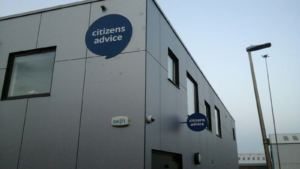 Main office
The Davidson Building,
Swan Street,
Gateshead,
NE8 1BG
Hubs in the region

This Is The North podcast

Stay connected


Easy access
Company limited by guarantee registered in England and Wales 2631064 and registered Charity 1020565. VAT Number 484972535. Registered office The Davidson Building, Swan Street, Gateshead, NE8 1BG. Citizens Advice Gateshead ar regulated by the Financial Conduct Authority (FCA). Reference number: 617611
